

Dancing First Drafts
A Lesson in Writing from a Terrible Dancer

Last summer I went to a ceilidh, not knowing what I was getting in to. Believing wholeheartedly I wouldn’t have to dance (I had no such luck).
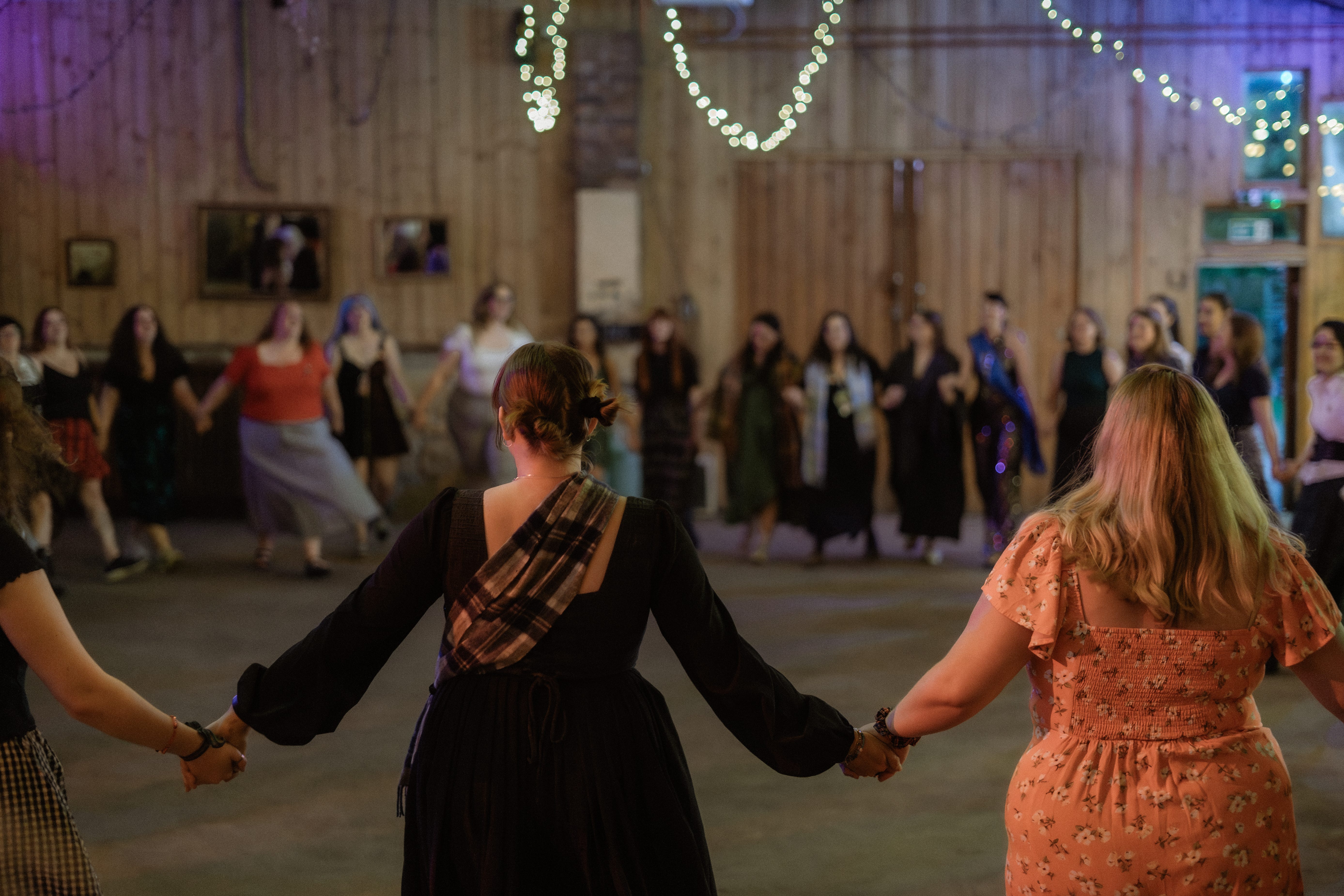
Marina, why would you go to a ceilidh and not dance? Well, something you should know about me is I have dyscalculia. This largely affects many areas of my life including my memory (not all of my rhythm, thank goodness, that it is a fragile connection to my brain—which is why I excelled at piccolo and not at instruments that required my hands to do two separate things like guitar or most kinds of percussion). So when it comes to dance, I’m a disaster because I can’t remember choreography, I struggle with any sense of direction, and am apt to loose the rhythm because my body is meant to be doing multiple things at once. Though, before this dance last summer, I didn’t realize how bad I was…
If you’ve never danced a ceilidh before, they can move very quickly—turn-my-brain-and-my-body-into-a-hurricane kind of quick. But at this particular event, we started off easy. Easy for me. We also didn’t have a choice in whether or not to dance. Surprisingly, I did well, and I had fun! I enjoyed the ride. So I decided to dance the second, another easy pace and choreography. This went superbly too, though there was a decline in my coordination, but not enough to spoil. I started thinking I’d been wrong my whole life about my dancing skills. Maybe I’d just never learned this kind of repetitive movement before. It was 10pm at night, but the sun was coming out in my mind!
It was the third dance that sent me rocketing back to Earth. Not at first though. Yes, I did get all turned around at times, but while we were dancing, although I felt genuine fear and confusion, I really thought I was getting it right (that’s the dyscalculia—you could take the same path twenty times and then get spun around a little on the twenty-first, make an [un]educated guess to turn left when you should have chosen right, and accidentally walk off a cliff). Sure, I had to concentrate harder because of the constant pace change and numerous turns and counting, etc., but despite the very discordance in my brain that all of these things bring, I was confident. It wasn’t until after the dance, when there was chatter of people going the wrong way that I realized it was probably me. Bless those angel women, no one singled me out, but I knew, without a doubt, I was the tornado of that dance. Out of 50 women, maybe I wasn’t the only one, but I’d surely contributed. I didn’t dance again after that.
Now, nearly half a year later, as I’m wont to do, I’ve found a metaphor for writing in that evening. Most importantly, a metaphor for writing first drafts.
A surefire way of messing up a first draft is overthinking it. If we’ve done the prep work properly, built a solid foundation to house our story, should we not trust in the rhythm of our own telling the whole way through? It’s just like dancing (for people without dyscalculia, I’d assume). The moment you start thinking about the steps, look back to how you should have stepped in instead of out, you begin to stumble and the drafting stops. But if you trust the inherent rhythm of the story/the dance, and if you trust yourself, you can get completely swept away by the song. Easier said than done, but it’s a learned (often slippery) kind of trust. Those first two songs of the ceilidh, I believed I could do it because I had no proof otherwise (and no choice but to try). The third song though, was so taxing on my ability to move and think coherently, I met resistance, and I did it wrong.
When we’re drafting, we should trust ourselves to tell the story right and also to tell it wrong. Because a first draft should be a disaster. Unlike a ceilidh, we can go back and pinpoint where we veered off in the wrong direction and edit once the song is over.
I think I’ll stick to writing from now on ✒️
"When we’re drafting, we should trust ourselves to tell the story right and also to tell it wrong."
Wow, this quote. Thank you for this one!